
 by
by 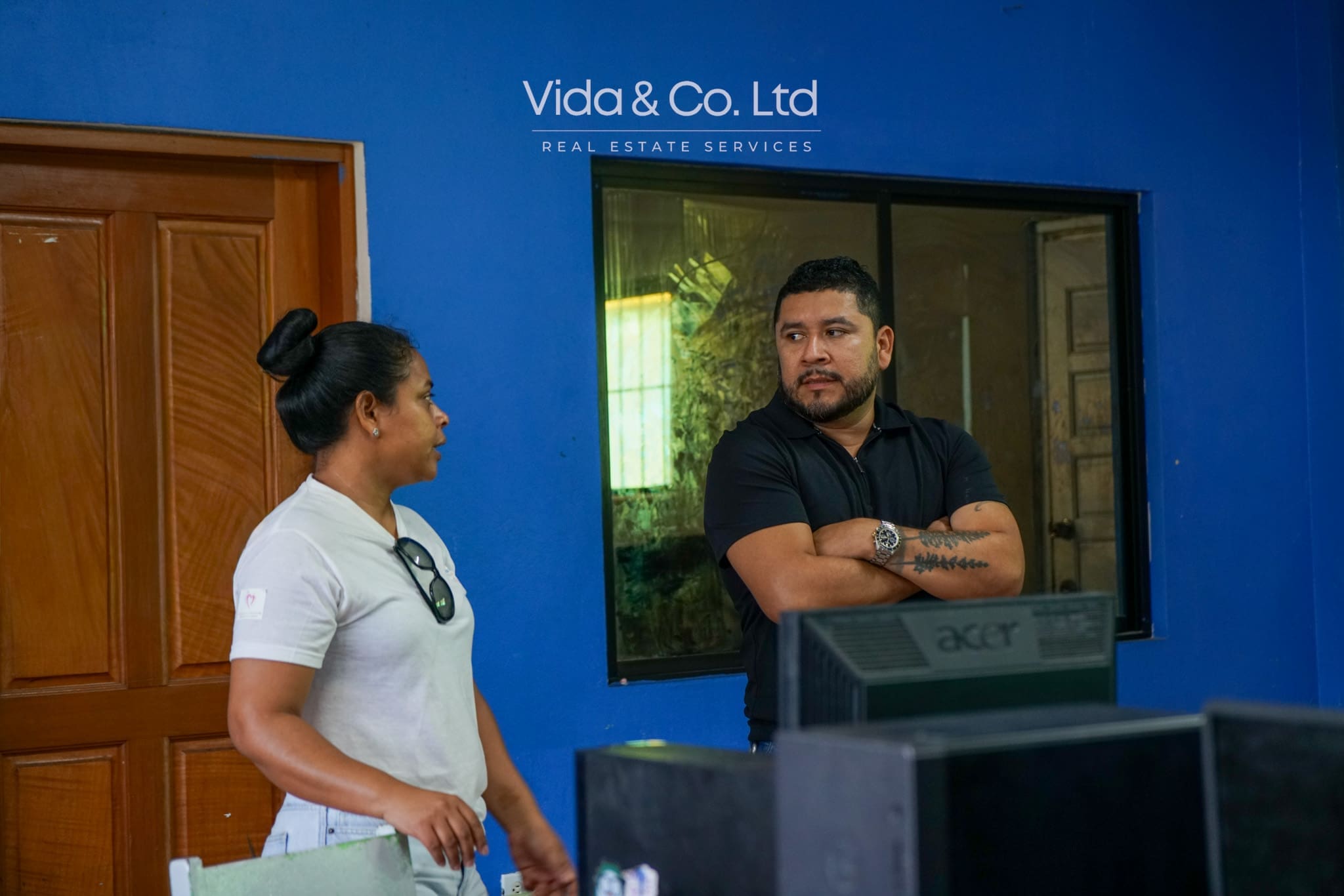
Belize is often introduced to the world through its reef, its rainforest, and its ruins. Less often mentioned is the thing that actually keeps most Belizean households running: a small, independently owned local business. If you look closely, you’ll see that the backbone of many communities is the Belize local busines, a tour operator with one boat, a roadside kitchen open four days a week, a construction crew of three, or a craft stand outside a market. Increasingly, a laptop and a following. This is the texture of the Belizean economy. It’s the reason Vida & Co. spent an evening in San Ignacio talking about branding, sales, and bookkeeping with fifteen young entrepreneurs.
A Country Built on Small, Independently Run Local Businesses
The numbers back up what’s visible on any street in Cayo District. The World Bank reports that Belize’s economy grew an estimated 3.5% in 2024. This growth was driven largely by a surge in tourism, trade, and transport sectors. These industries were built, in large part, on small operators rather than large corporations.
The Statistical Institute of Belize‘s most recent Business Establishment Survey captured more than four thousand active belize local businesses across every sector of the economy, outside of banking and insurance. That’s a lot of independently run ventures. They form the base of a small country’s economic output.
It’s also, often, not optional. Youth unemployment in Belize hovers near 20%. Across the region, entrepreneurship in developing economies tends to be necessity-driven rather than a lifestyle choice. People build something because the formal job market hasn’t offered them an alternative. Seen that way, a fifteen-year-old sketching out a business plan in a San Ignacio classroom isn’t doing an extracurricular exercise. Instead, they’re rehearsing for something a large share of them will actually do.
An Evening Built Around What That Actually Requires
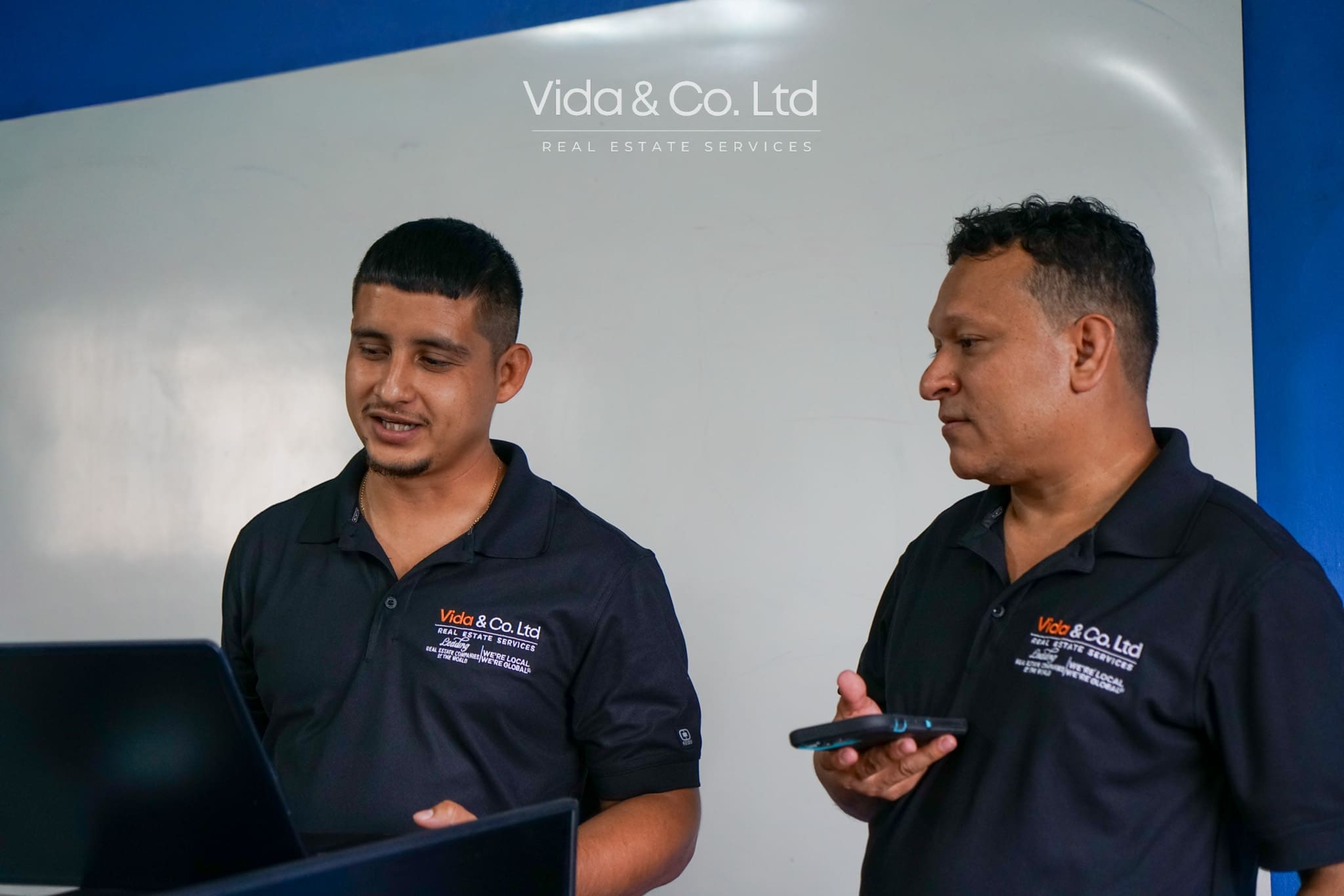
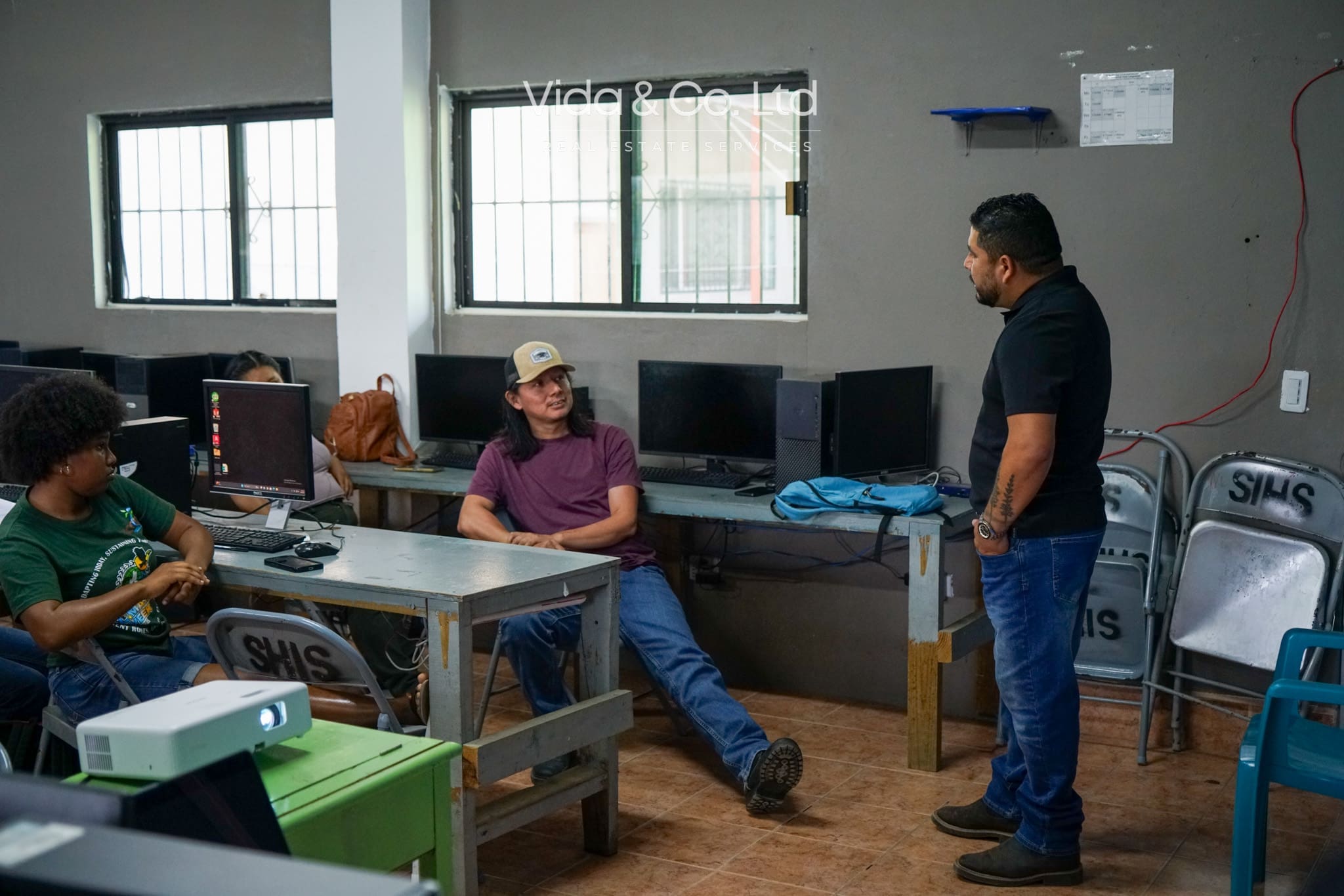
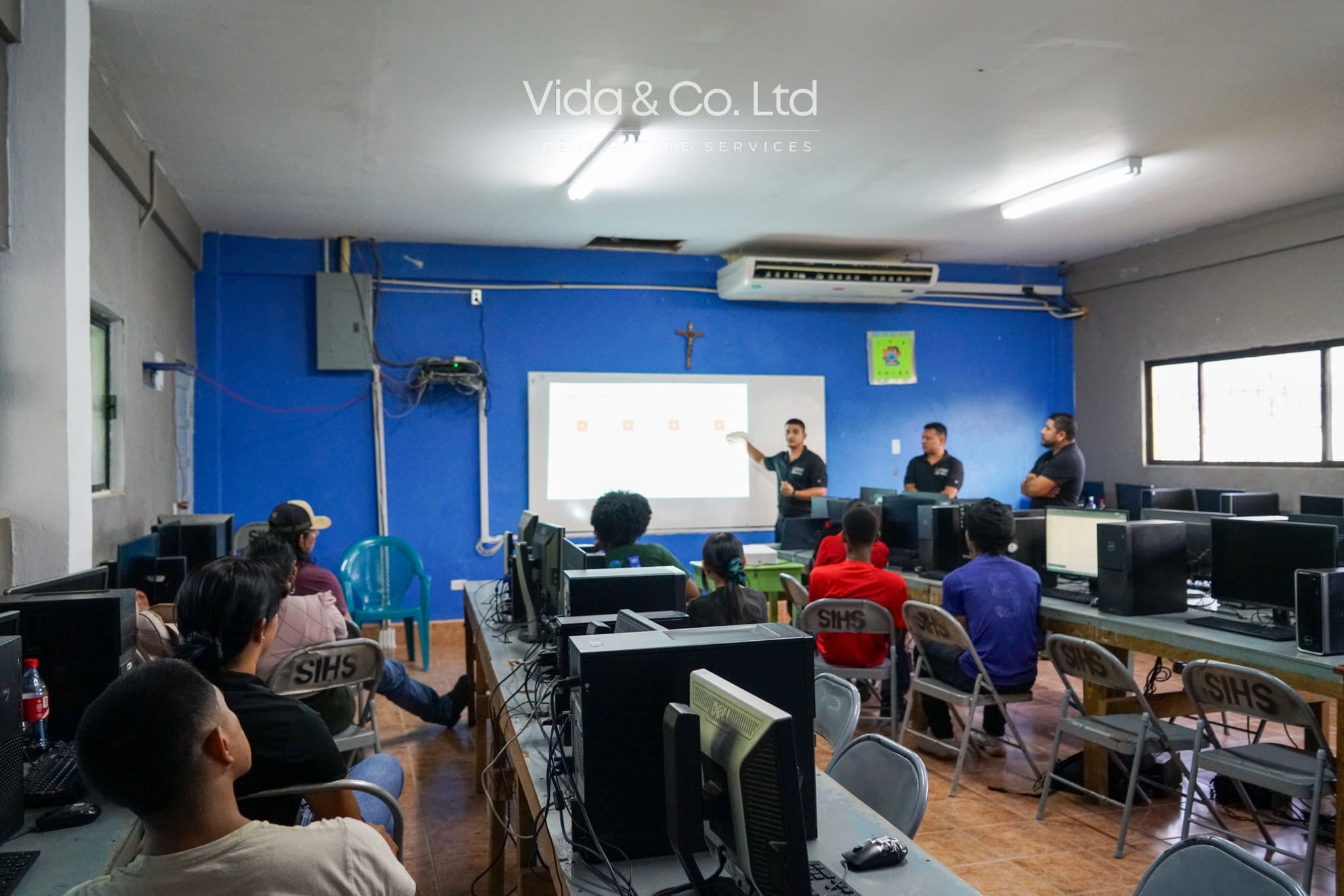
That was the premise behind the July 22 mentorship session Vida & Co. co-hosted with the San Ignacio & Santa Elena Town Council at St. Ignatius High School. Fifteen entrepreneurship scholars, most already holding a business plan, several already running a business, spent an evening on the fundamentals that separate a business idea from a business that survives its first year.
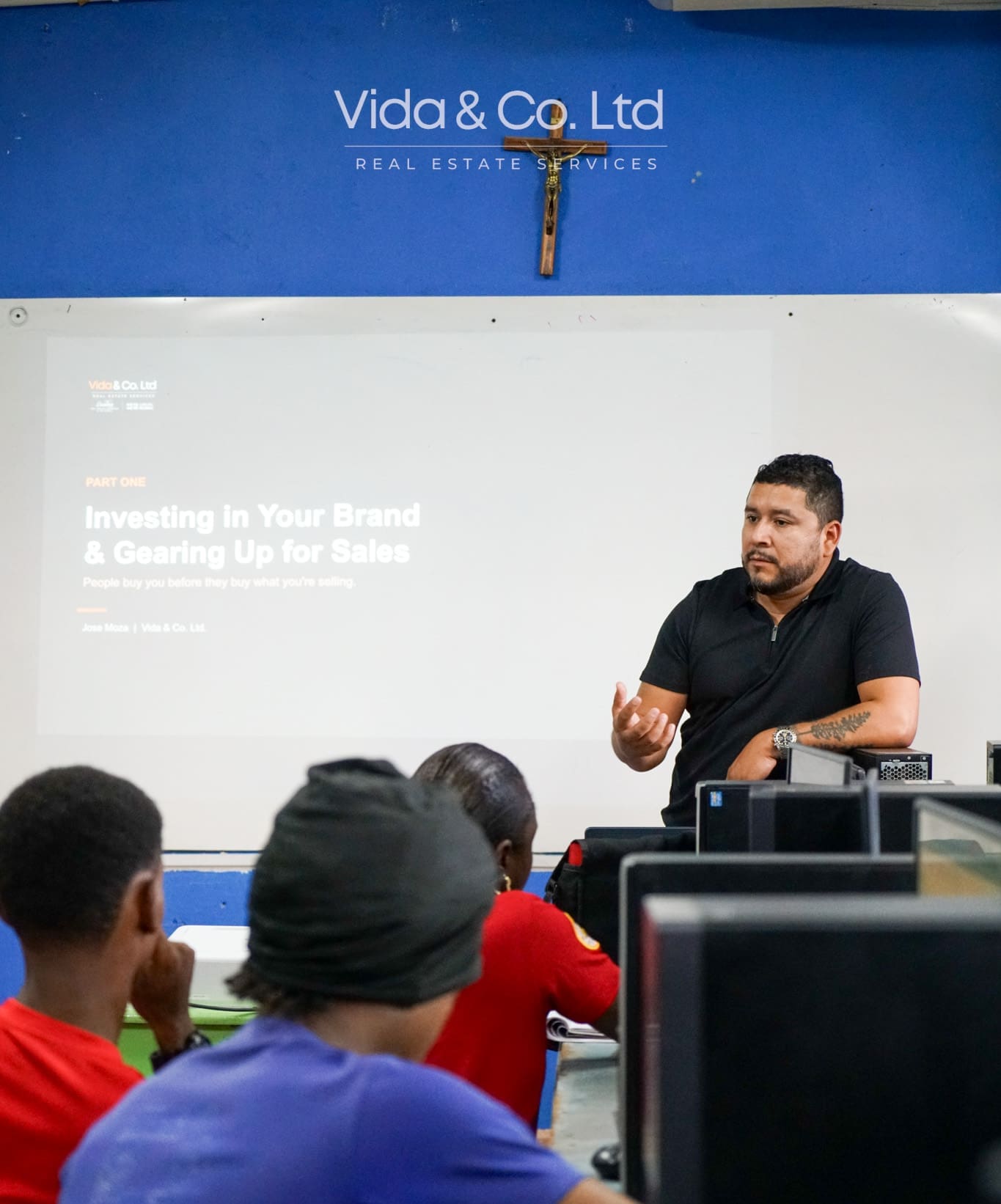
Jose Moza
Opened with brand and sales: reputation, confidence, and a simple four-step process, ask, listen, present, close.
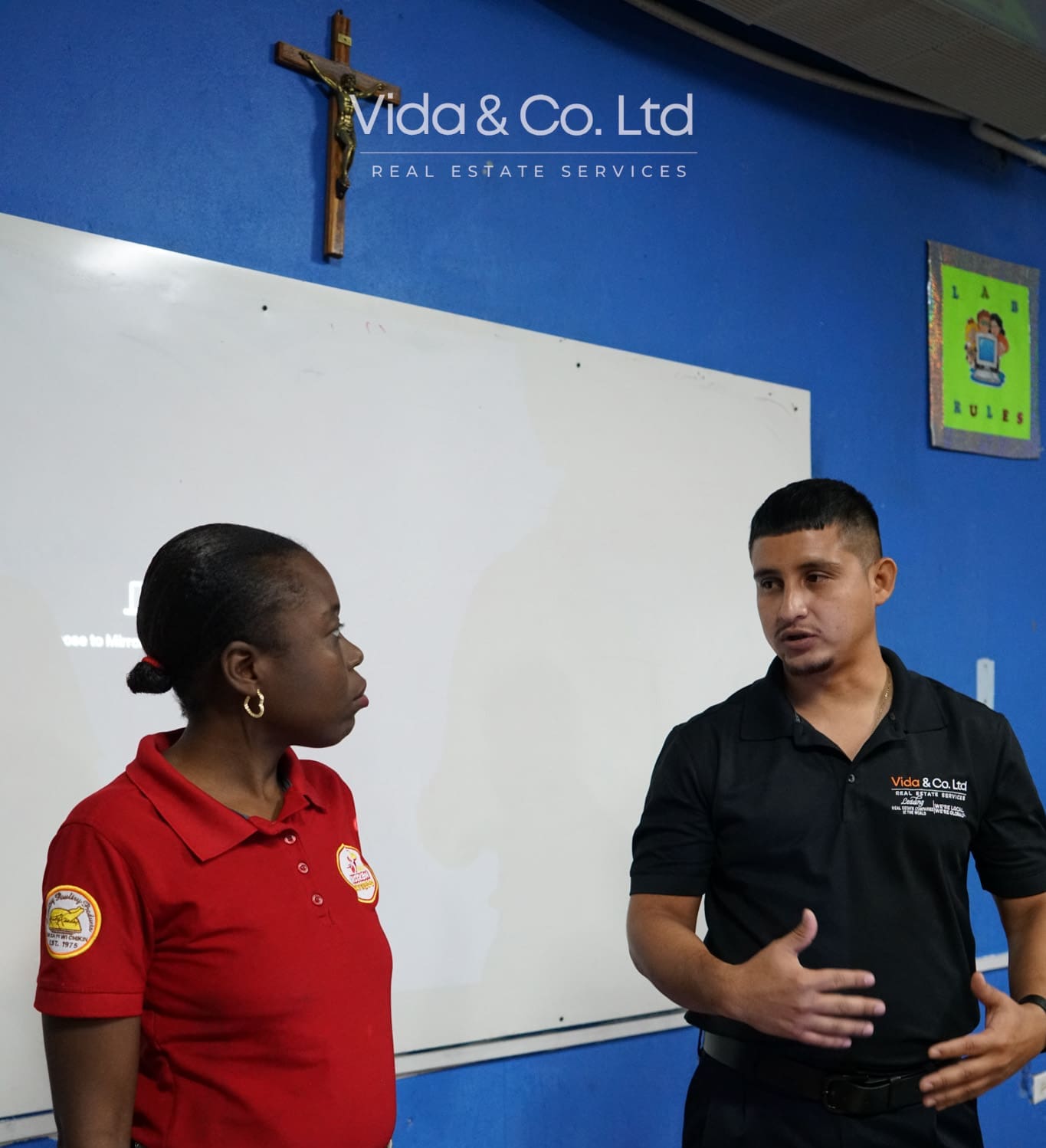
Aris Carrera
Covered marketing fundamentals: knowing your audience, one clear message, the right channels, and showing up consistently.
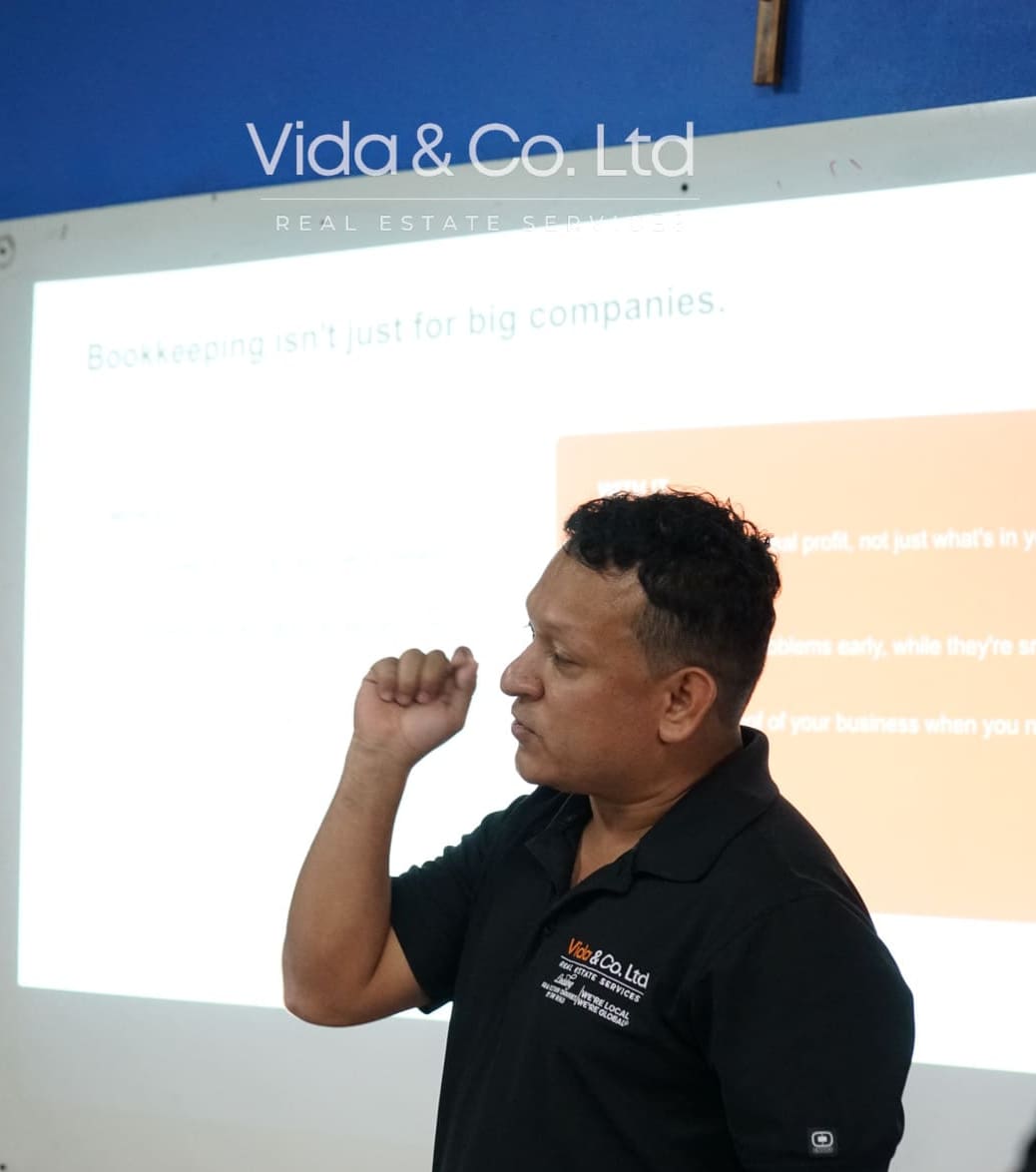
Byron Hernandez
Closed with bookkeeping: recording every sale and expense, separating business money from personal, and understanding that cash in hand is not the same thing as profit.
None of this is business-school theory. It’s the exact skill set behind the tour operator, the kitchen, and the craft stand. It’s the difference between a business that’s busy and a business that’s actually working.
Local Roots, Global Reach – The Same Story at a Different Scale
Vida & Co. Ltd. has grown from a boutique brokerage based in San Ignacio into a LeadingRE-affiliated firm working across all seven districts of Belize. The growth engine has been the same one taught that evening: consistent branding, consistent communication, and a business run on real numbers, not guesswork.
That local-to-global arc isn’t unique to Vida. It’s Belize’s broader story. A country of small, locally rooted businesses is, at the same time, one of the region’s more internationally connected economies. Its tourism sector is filled with visitors from North America and Europe. Its real estate market draws buyers from the same places. Its export economy is tied to partners well beyond the Caribbean basin. Being local and being global have never been in competition here. Instead, they’re the same strategy, running at two different sizes.
Where Real Estate Meets Small Business, on Both Sides of the Border
Real estate sits at an unusually direct intersection of Belize’s local small-business economy and its international one.
On the local side, a growing tour operation eventually needs a proper base of operations. A guesthouse needs clear land title before it can expand a room or two. A home-based food business often depends on a landowner willing to lease a small commercial footprint. As a result, real estate professionals in Belize spend as much time enabling that kind of quiet, local growth as they do closing headline transactions.
On the international side, buyers from the United States, Canada, and the United Kingdom continue to look to Belize for the same reasons that have long applied: no capital gains tax, a British common law legal system, English-language land registry, and a currency pegged to the US dollar since 1978. Through the LeadingRE network, that international interest doesn’t stay abstract, it connects directly to a local market still substantially made up of small, family-run land and business holdings.
The scholars at St. Ignatius High School are, in a small way, the next generation of both sides of that equation. Some will build the local businesses that give Belize its character, and some may eventually be the sellers, buyers, or landlords on the other end of a transaction that links Cayo District to a buyer thousands of miles away.
Why This Is Worth an Evening
Belize’s economy isn’t run by a handful of large employers. It’s run by thousands of small ones. Most of them were started out of necessity; many of them started young. Spending an evening reinforcing brand, sales, and bookkeeping fundamentals with fifteen scholars in San Ignacio isn’t a departure from Vida & Co.’s work. In fact, it’s an investment in the same economic base the company has always operated inside of, local and global at once.


